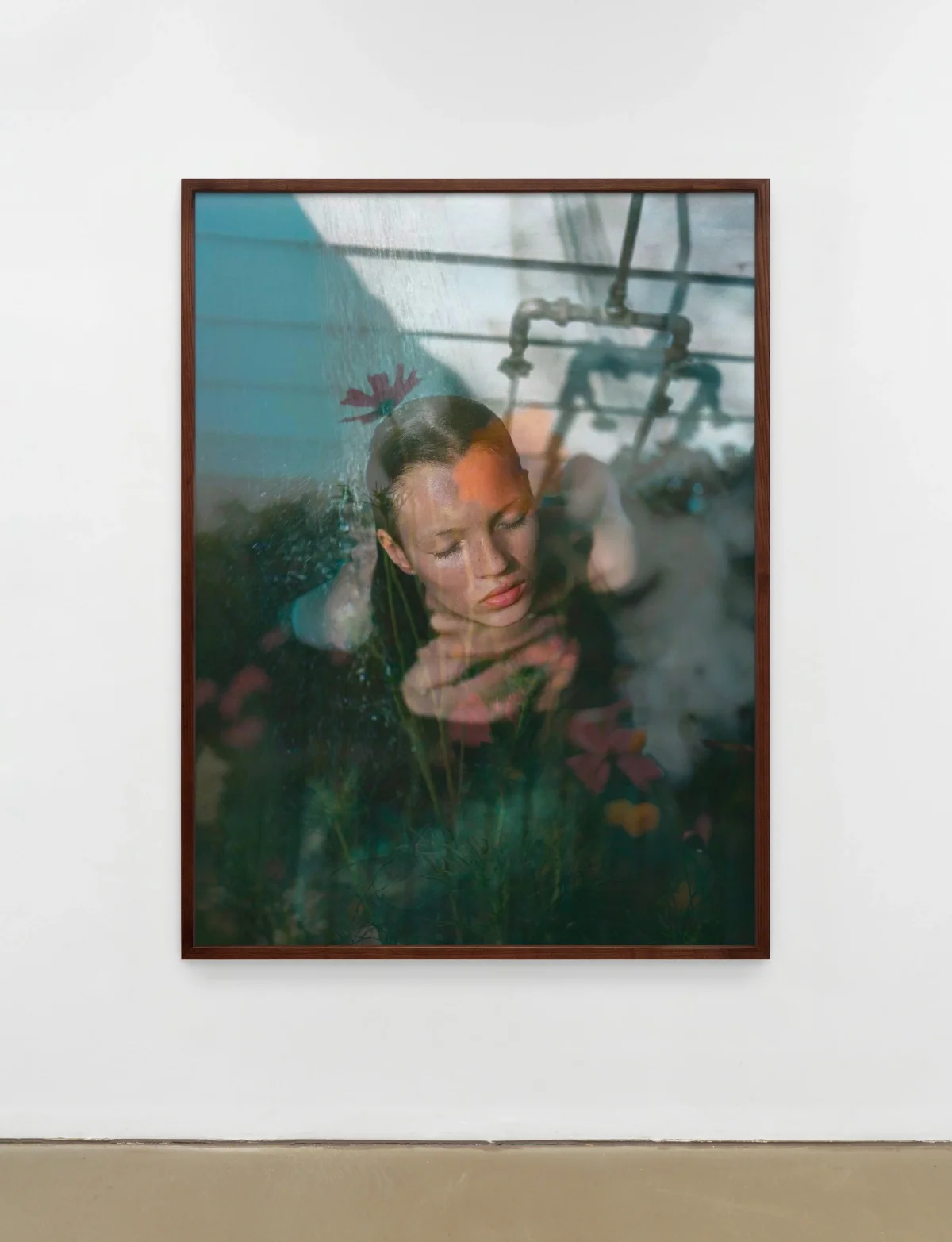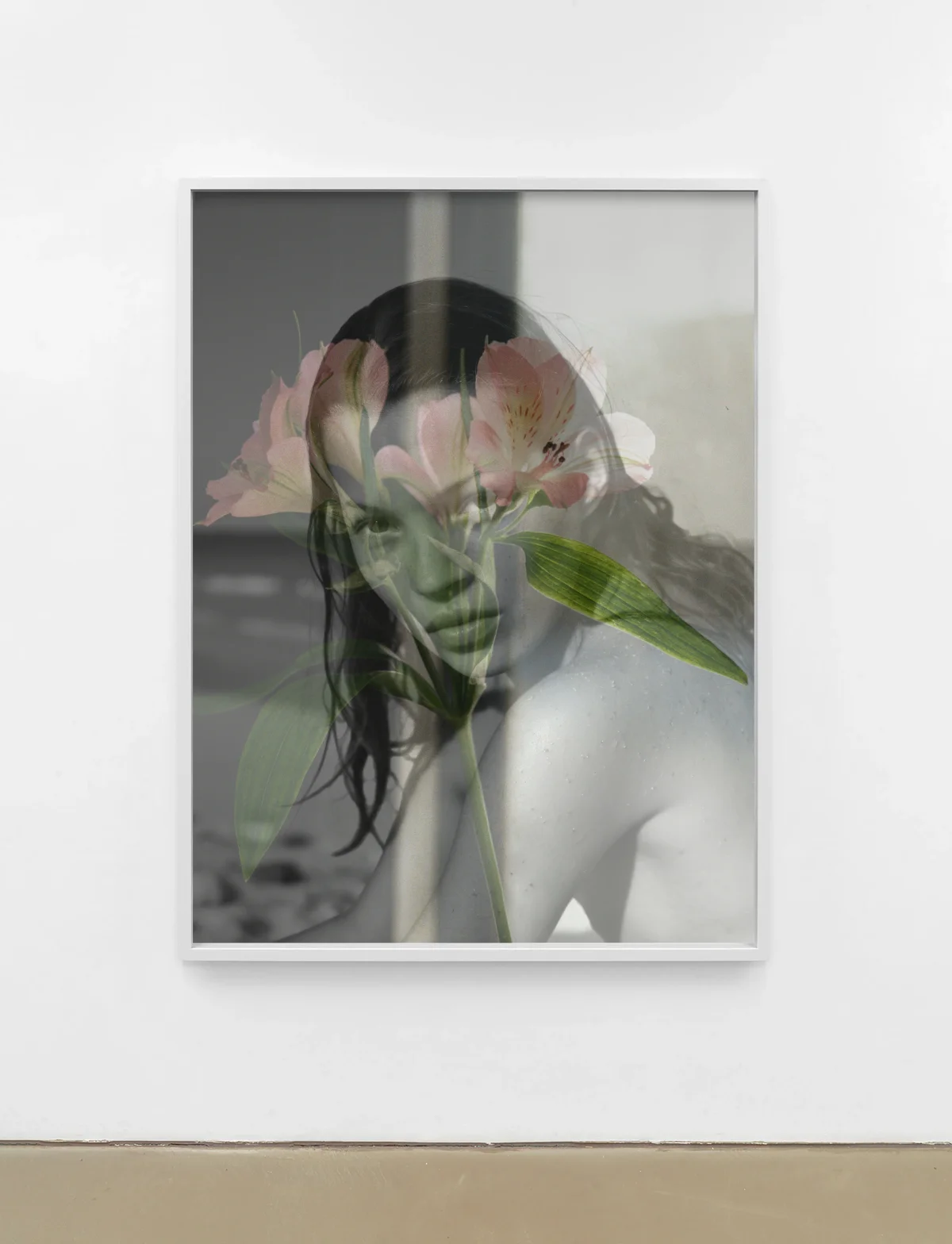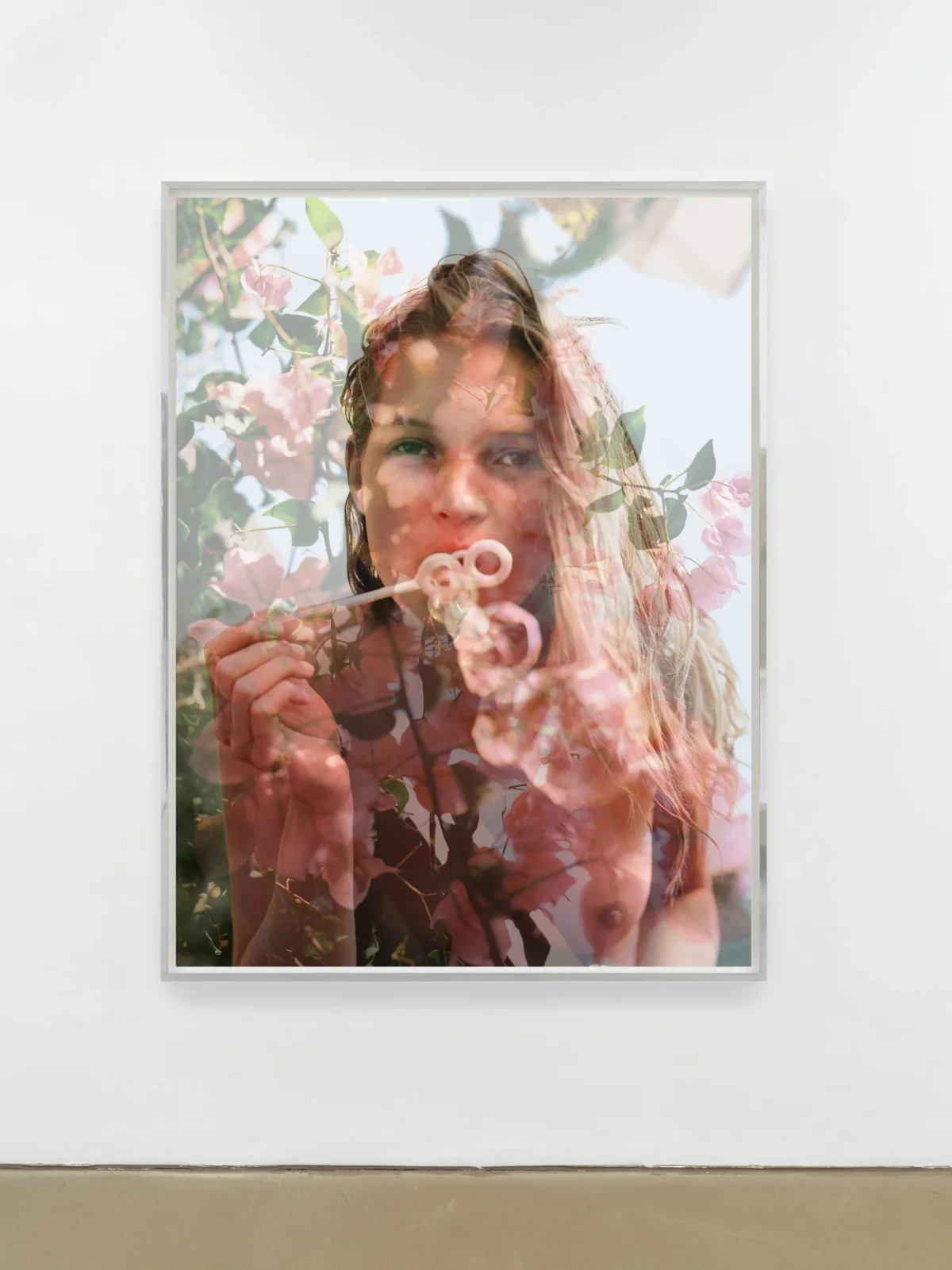
This is a deeply personal presentation, even where it looks outward. The clearest way to read the first room of our off-season project is to put Yves Scherer himself in the middle of it, with two kinds of image pulling in opposite directions on either side.
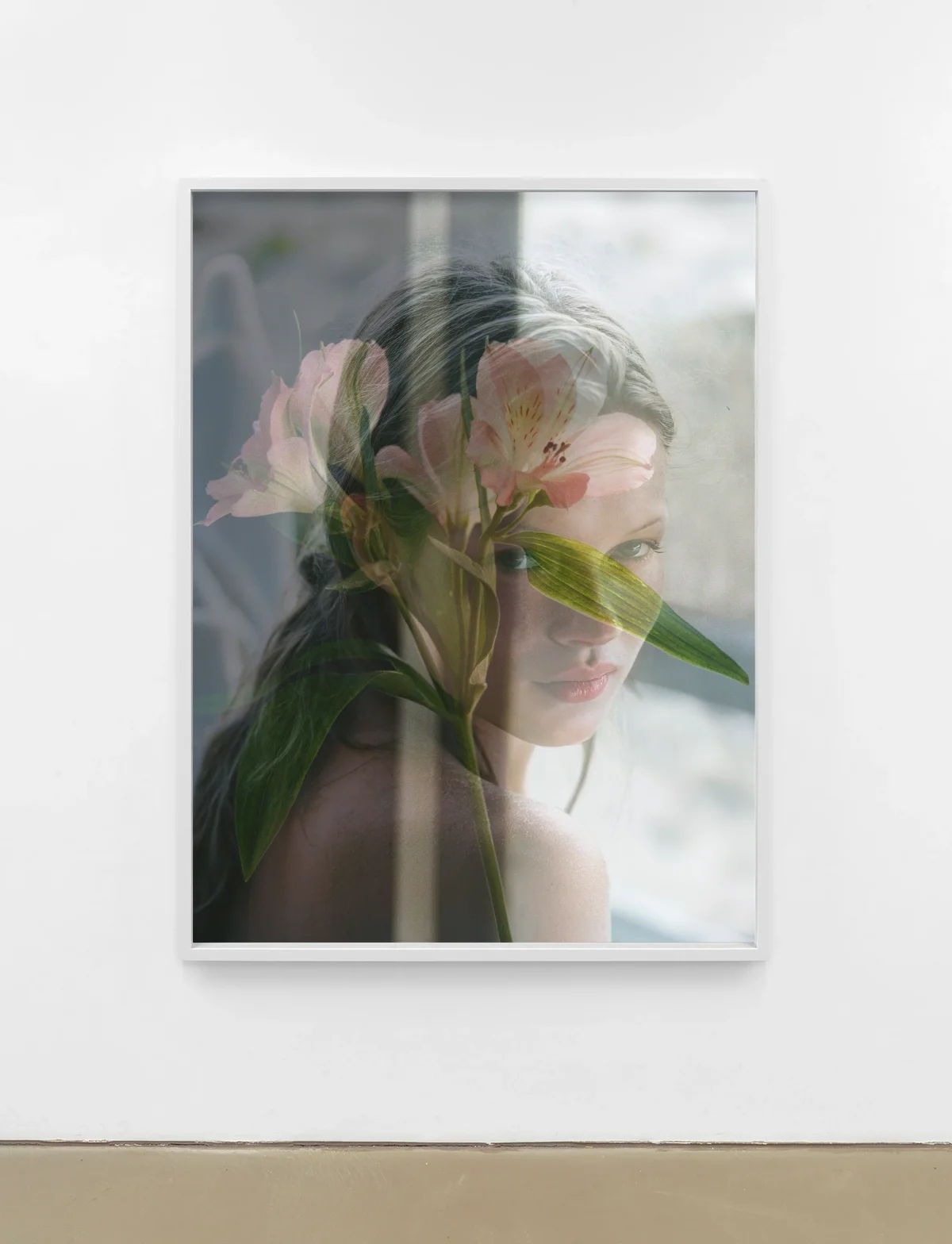
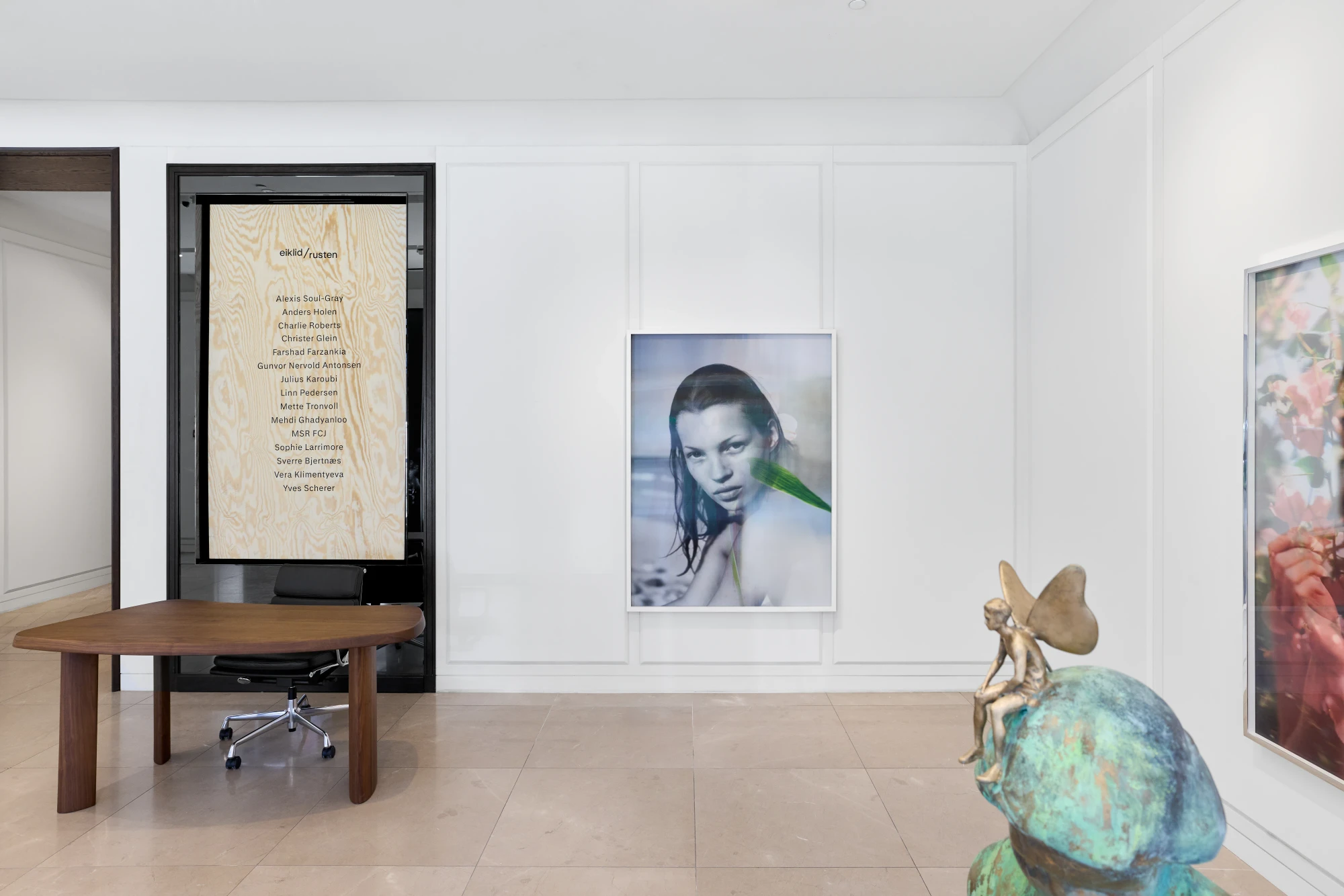
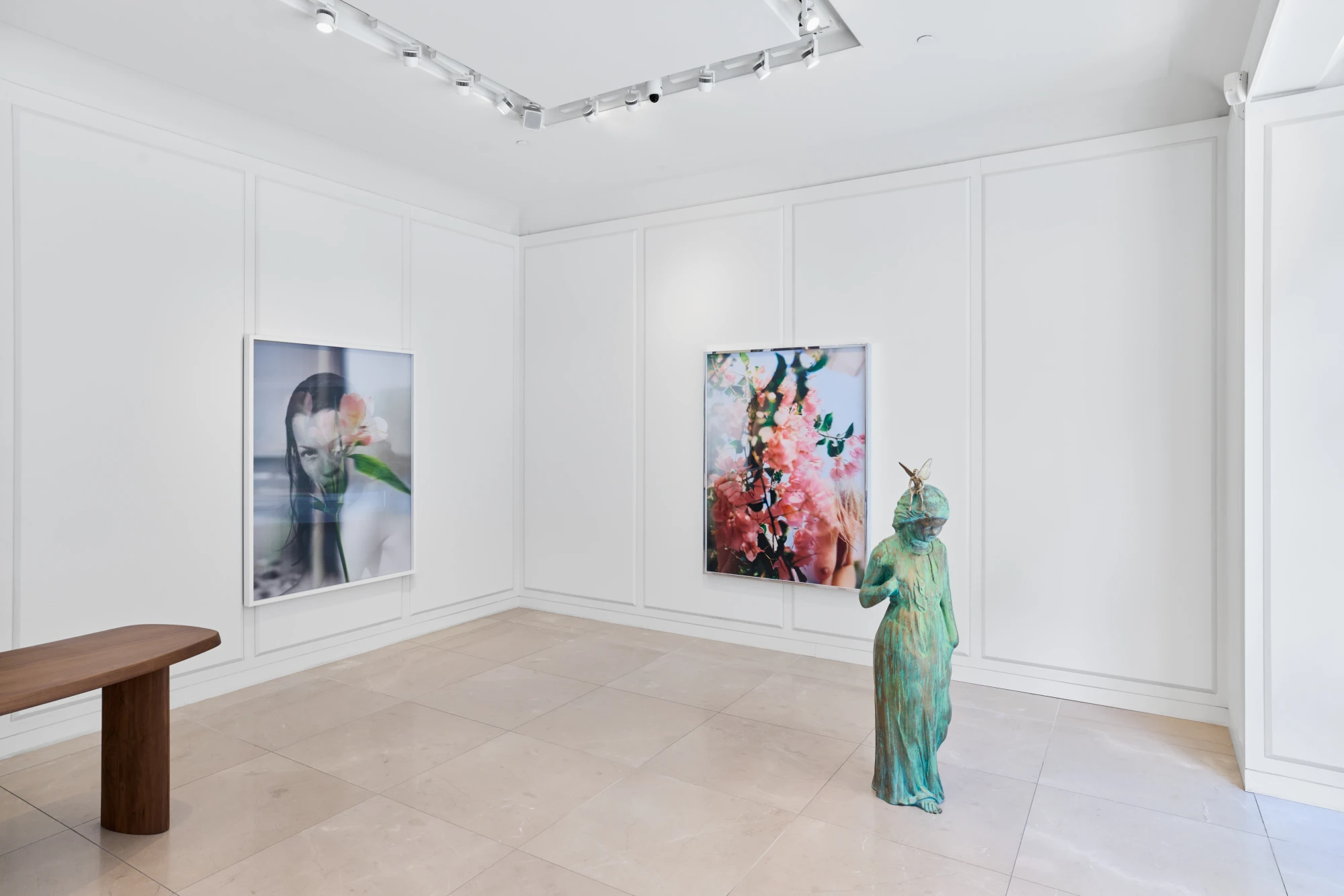
On one side are the lenticulars. The three works titled Imagine, two from this year and one, Imagine (Shower Kate), from 2024, are the aspirational pictures, the poster on the wall that you reach toward. They are built from a shared visual memory, photographs of Kate Moss taken by Mario Sorrenti in the early 1990s, layered with Scherer's own images of flowers. What matters here is less who is pictured than what the image does. It is polished, desirable, and it refuses to hold still. As you move past, the surface shifts and the face dissolves into blossom and back again, so that the picture you see depends entirely on where you are standing. It behaves the way a public image behaves, the way a feed behaves, always composed, always slightly out of reach, never quite the same twice.
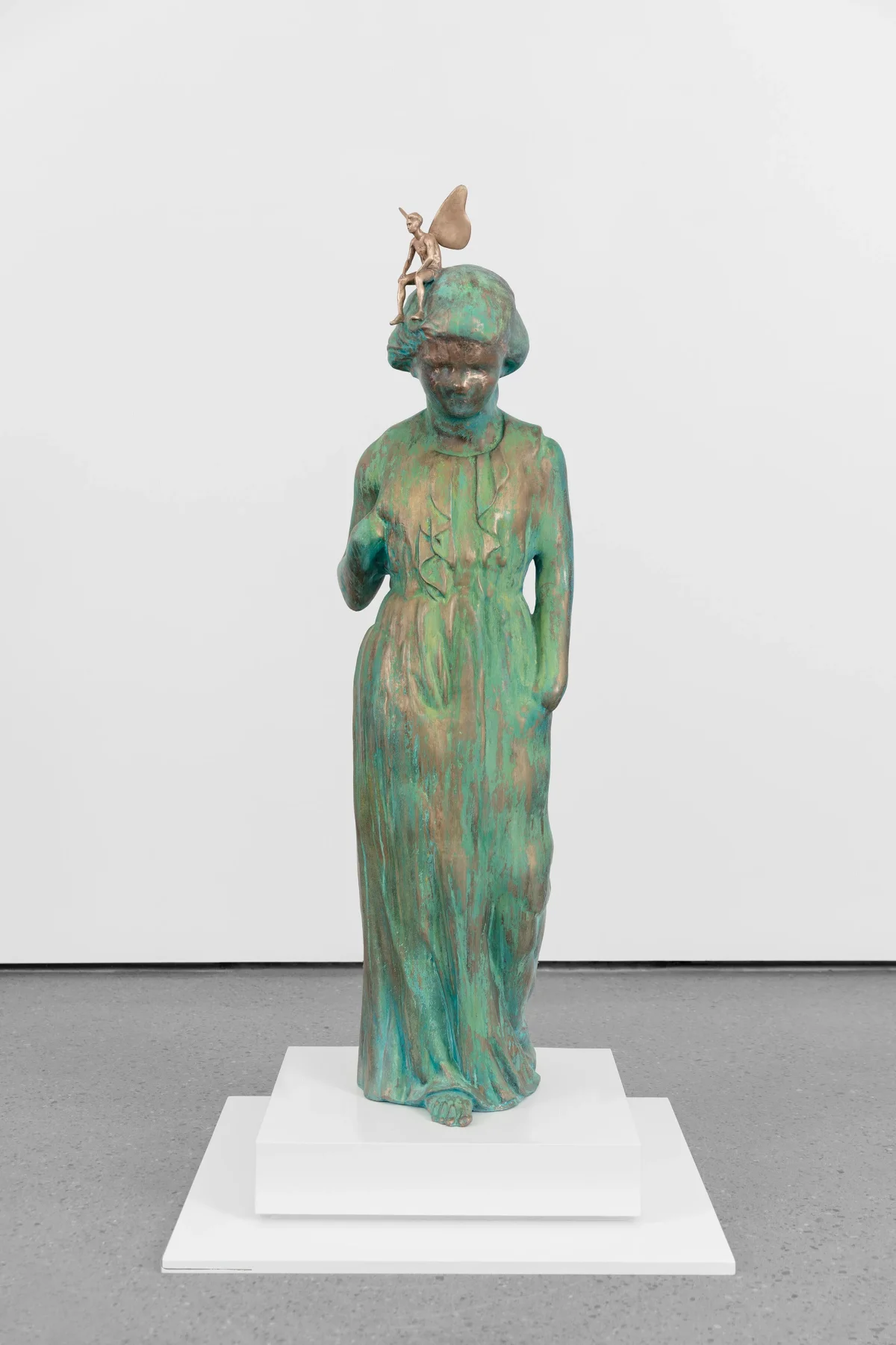
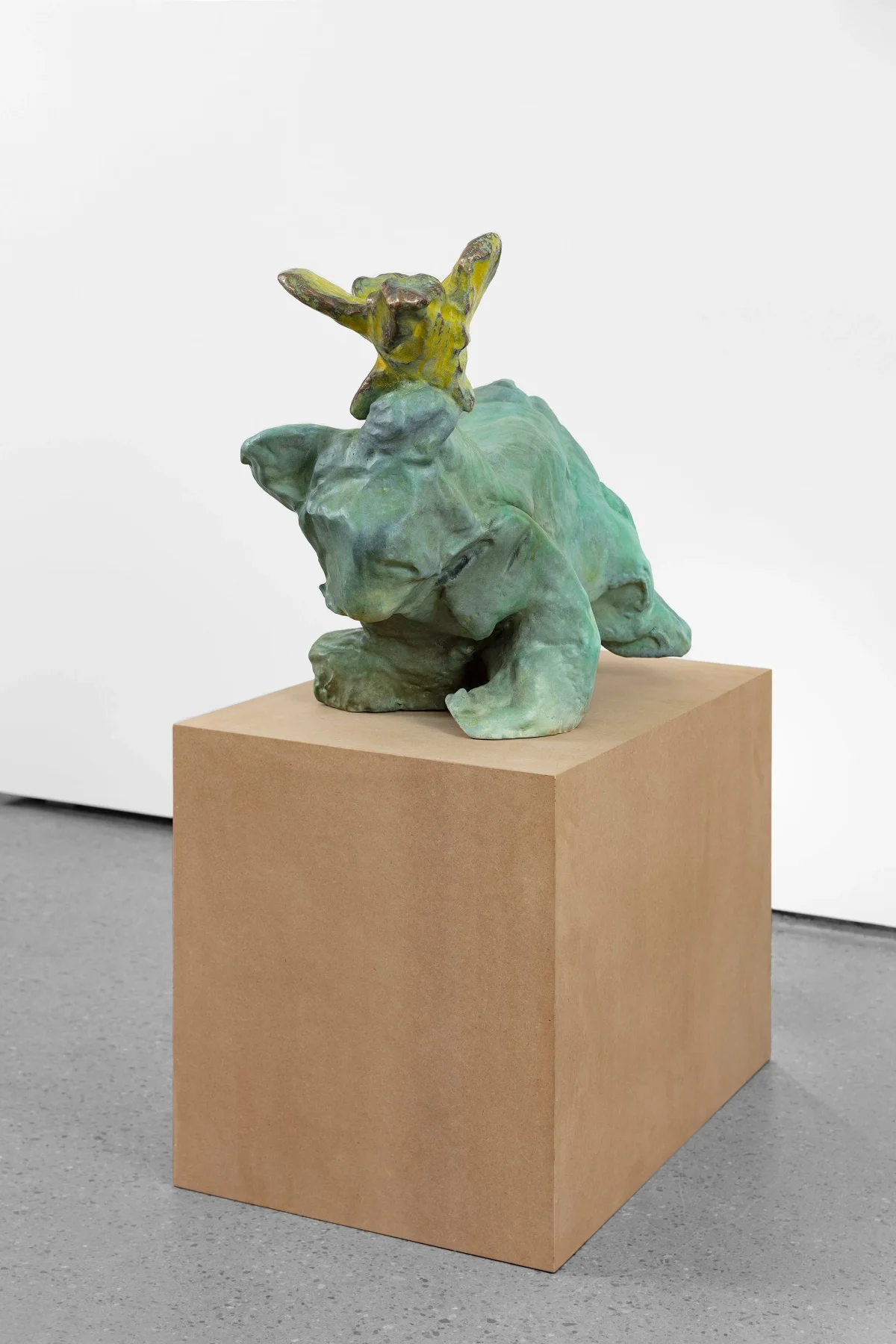
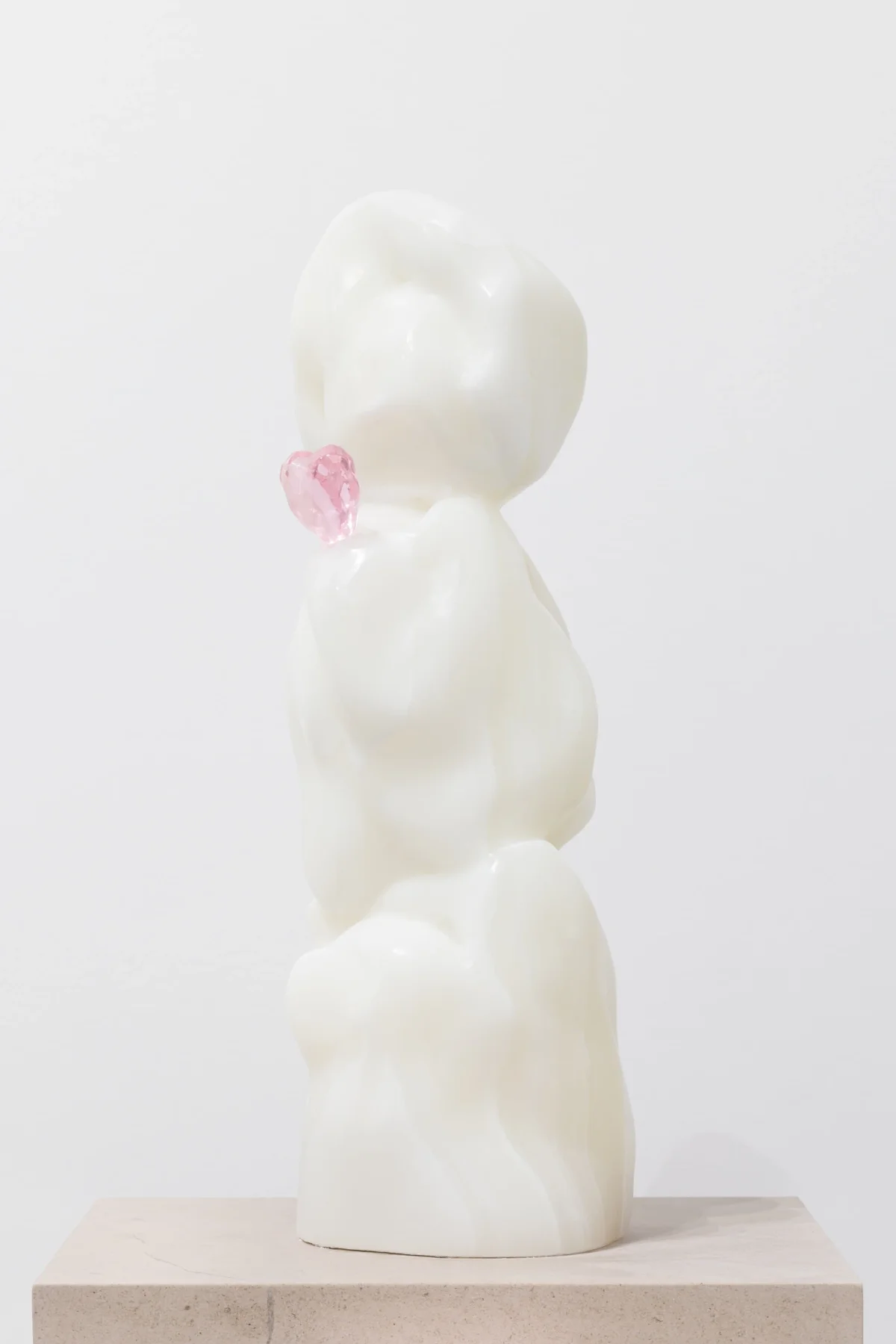
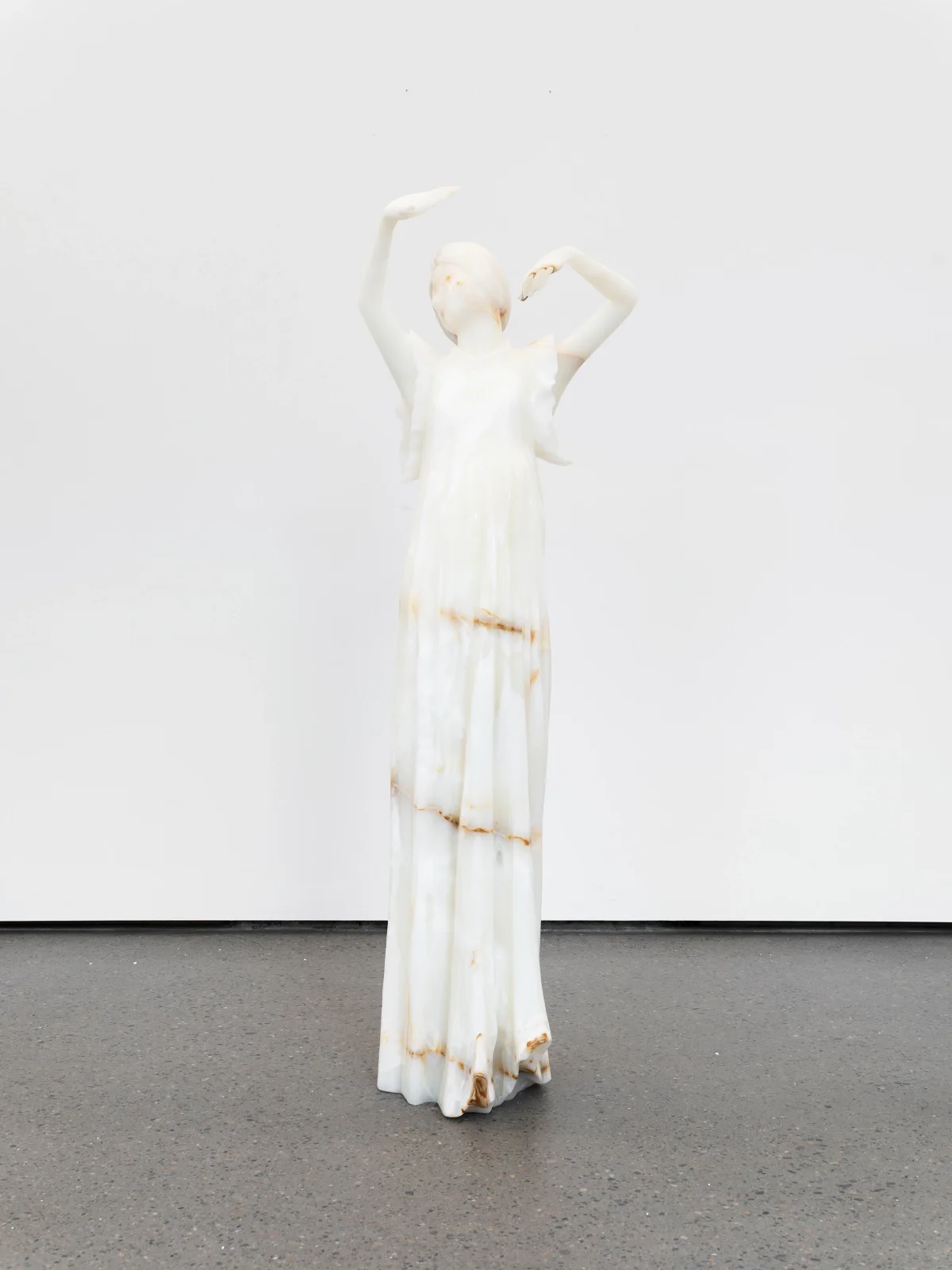
On the other side are the sculptures, and this is where Scherer actually puts his hands. New York Minute began on the floor. He modelled it in clay with his young daughter before casting it in bronze. Its loose shape reads as a dog and a bird caught together in motion, close enough to Snoopy and his little yellow friend to raise a smile, and abstract enough that you cannot tell whether the two are playing or fighting for their lives. It sits directly on the floor, without a plinth. Beside it, Rainy Day in New York shows a life-size girl mid-step with a small winged boy on her hat, his eyes on the horizon. In the two former fitting rooms are the white onyx works: Daylight, a tall standing figure with raised arms whose pose recalls Georg Kolbe's Alba, the statue reflected in the pool of Mies van der Rohe's Barcelona Pavilion, with the amber veining of the stone running through her, and Cutesy, a smaller soft form with a single faceted heart of pink glass set into the white onyx, two materials joined like elements in a collage. These are carved, weathered, handled. The two bronzes even carry the green patina, flecked with yellow, that comes from being left outside, time recorded on their own surface. Where the lenticulars are made to be looked at, these are made to be lived with.
Underneath all of it is a way of working. Scherer is a collector before he is anything else, always gathering material and looking for new ways to fit it together. The sources run from the entirely private to the entirely public, iPhone photographs and memories of family and friends on one hand, images from magazines and things noticed in passing on the other. A work is rarely just one thing. The figure in Daylight holds a memory of Kate Moss and of Kolbe's statue at the same time; Cutesy sets glass into stone; even a lenticular is a collage by nature, one image laid over another and shown by turns. If the room sets the aspirational against the personal, his method is to collage straight across the two.
Set side by side, the works describe a distance most of us now live inside, between the version of a life that gets posted and the version that gets lived, between the image we reach for and the afternoon on the floor with the clay. Scherer is not cynical about either. The lenticulars are genuinely beautiful and the sculptures are genuinely tender, and he leaves the gap between them open rather than resolving it.
There is a smaller rhyme worth keeping. When Scherer first began making lenticulars he worked with images of Emma Watson, who was then a face of Burberry, so showing this work inside a former Burberry store folds a private starting point back into the building. It is a coincidence the show is glad to hold onto, though it is not the whole story.
That openness is what the title is about. Imagine is a word Scherer returns to across his practice, and it points less to fame than to hope. There is a familiar discomfort that arrives with beauty, a reflex to distrust anything that looks too good, to call it naive or to file it away as a utopia we cannot afford. Scherer declines that reflex. The work makes a quiet case that it is alright to feel happy, that you do not owe the world a harder face simply because the world is difficult, and that the things which stay beautiful and joyful are worth trusting and keeping alive. Putting a little hope back into the world is, by his own account, one of the things he most wants his art to do.